Naples at a Slower Pace: Historic Streets, Bay Walks and Good Meals
· 7 min read
Disclosure: Some links are affiliate links; we may earn a commission at no extra cost to you.
Naples rewards attention more than a tightly packed checklist. Its historic streets, hillside neighbourhoods and open waterfront offer different ways to experience the same city. The temptation is to fill every day with museums, pizza stops and excursions. A slower visit makes another choice: stay in Naples long enough to notice how those places connect, rather than using it only as a gateway elsewhere.
This researched guide suggests three days with room to pause. It does not claim a personal visit, recommend a hotel we have tested or invent current prices. Check opening arrangements and transport details directly with each venue before you go, and use the booking partners to compare your own dates. Your energy, access needs and interests matter more than completing every suggestion here.
Find a base that suits your daily rhythm
The oldest neighbourhoods place churches, small shops and street life close together. It can suit someone who likes stepping directly into the city each morning, but a picturesque street is not necessarily a peaceful bedroom. Read recent accommodation reviews for noise, stairs, lifts and check-in instructions. Ask which floor the actual room occupies if access matters.
Chiaia offers another starting point, with access to the waterfront and a different balance between shopping streets and neighbourhood walking. Staying near the sea can make an evening promenade easy, but check the journey to the museums and other places you plan to visit. A location that looks close on a map may still involve a tiring route.
Vomero gives you a hillside perspective and a more residential setting. Public transport can help connect it to lower districts, but confirm the particular route and current service before choosing accommodation. Consider luggage on arrival and the return after dinner, not just the appealing view in the property photographs.
Compare the complete room price, cancellation rules, taxes, breakfast and any cleaning charges. The hotel links at the end are general affiliate links: enter Naples and your travel dates before choosing. They are not claims that we stayed at a particular hotel, nor guarantees that one provider will always be cheapest.
Day one: understand the old streets on foot
Start with a modest route through those streets rather than an ambitious march across the city. Spaccanapoli and Via dei Tribunali provide useful reference points, but the pleasure is often in what happens between them: a shopfront, a church entrance, a conversation spilling into a square. Allow enough time to stop without immediately falling behind schedule.
Naples' oldest core is recognised by UNESCO for its cultural significance and long historical development. That context is more helpful than trying to memorise a list of dates. Choose one historical theme or place that genuinely interests you, and let it guide the morning.
Around San Gregorio Armeno, craft shops are associated with the tradition of nativity scenes. Browse respectfully, ask before photographing people or interiors, and purchase only if you actually want an object. A working shop is not a stage set. Keep to public spaces and avoid standing in doorways while checking directions.
Pause for lunch before you become too tired to choose thoughtfully. Afterwards, leave the afternoon open for a church visit, another short walk or rest at your accommodation. Naples does not become less interesting because you take a break. A rested evening often gives more than an exhausted attempt to squeeze in one more stop.
Day two: archaeology and a slower meal
Make the National Archaeological Museum, often called MANN, your main cultural stop. Its collections include classical sculpture and material associated with Pompeii and Herculaneum. You do not need to see everything equally. Choose several areas that interest you, and allow time to read labels rather than moving straight from one famous object to another.
Check current ticketing and access arrangements before visiting. Collections and rooms can be affected by changes, so avoid building a whole day around an assumption that every display will be available. If you are travelling with children or someone who tires easily, plan a shorter visit with a clear stopping point.
Afterwards, give lunch more time than a quick refuelling stop. Ask each person to choose one object or story they would like to remember. That small conversation can turn a museum visit into something that lasts beyond the photographs. There is no need to add another large collection simply because it is nearby.
Spend the rest of the day locally or return for a rest before dinner. If the weather favours outdoor time, adjust your plans rather than treating the itinerary as a contract. A slower trip leaves room for that decision. The aim is to understand something of Naples, not to accumulate proof that every hour was occupied.
Day three: hills or the waterfront
Choose one main direction for the final day. Vomero and the area around Castel Sant'Elmo and the Certosa di San Martino offer a hillside perspective. Before visiting either attraction, check the relevant official arrangements. The journey uphill and the views can form a satisfying outing without requiring a second major excursion immediately afterwards.
Naples has metro services, buses and funicular connections. Confirm routes, fares and service notices with the city transport operator. Do not assume every funicular is operating normally on your dates. A helpful route is one that matches your destination and abilities, not simply the one described as most scenic online.
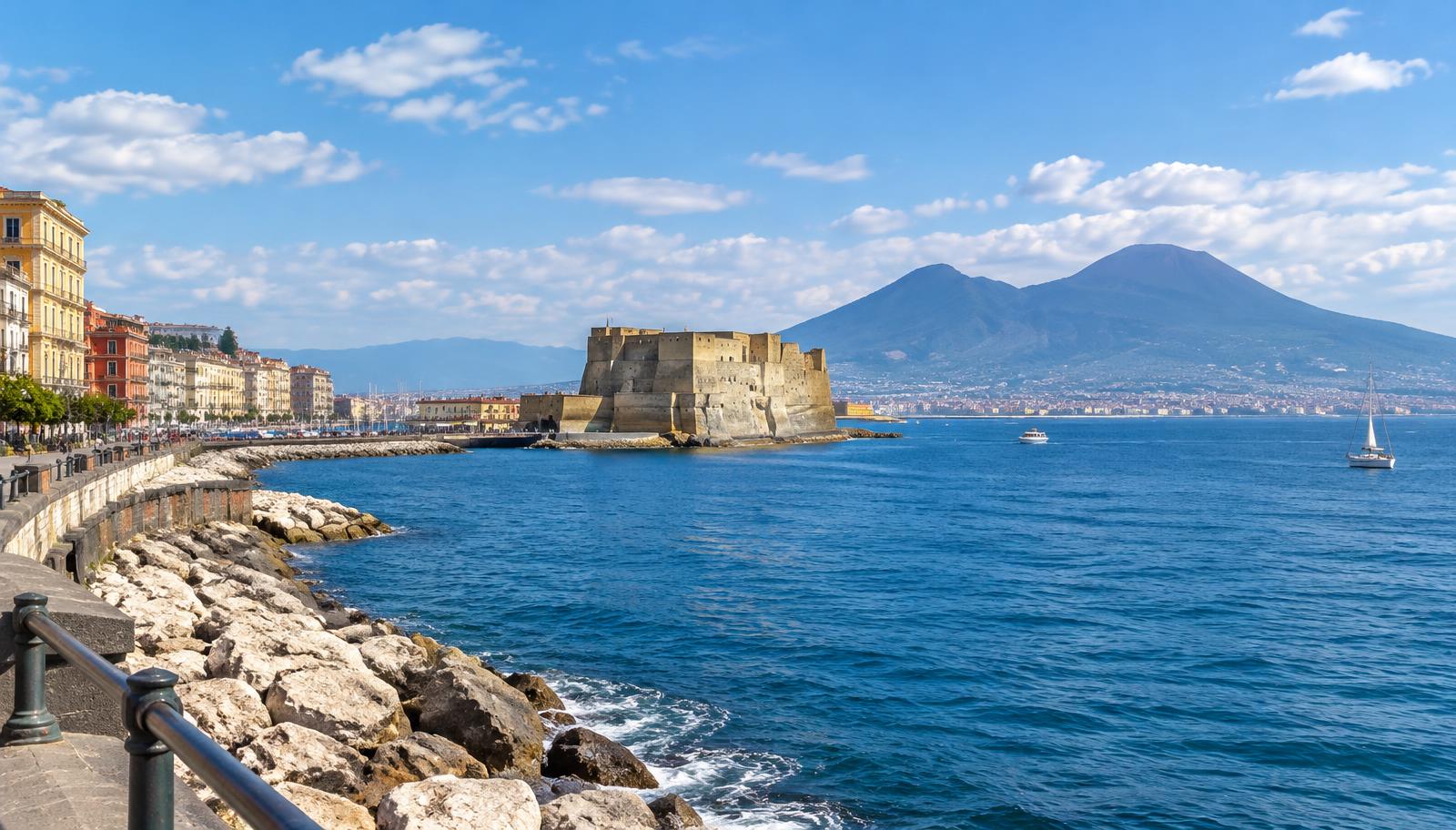
Alternatively, spend the day around Chiaia and the Lungomare. The waterfront provides a different scale from the narrower streets inland. Walk towards the area around Castel dell'Ovo, taking time to look across the bay. Treat the castle as a landmark unless you have confirmed current visitor access; exterior views do not imply that entry is available.
A waterfront day can be as simple as a walk, lunch and a second shorter stroll when the light changes. Bring weather-appropriate clothing and avoid turning a sunny outing into hours without water or shade. Choose comfort over mileage. If you have already had a demanding museum day, this quieter finish may be exactly what the trip needs.
Give food room to be enjoyable
Pizza belongs naturally in a Naples visit, but you do not need to queue for every famous name. Read the menu, check whether the place suits your needs, and choose a time when you can enjoy the meal. One pizza eaten without hurry can be more memorable than several rushed stops organised around online rankings.
For a morning or afternoon pause, sfogliatella and babà offer introductions to local pastry traditions. Babà may contain alcohol; fillings and pastry ingredients vary. Ask directly about dietary needs and allergies instead of assuming a familiar-looking item is suitable. Coffee can be a small ritual rather than another recommendation to tick off.
Balance restaurant meals with simpler choices when that fits your appetite and budget. Check displayed prices and any listed charges before ordering. We have not supplied supposedly current meal costs because no receipts or tested restaurant details were provided. Keep a note of what you actually pay if you want a useful record for a future visit.
Make practical choices before adding excursions
Keep each day's activities geographically connected. Naples' hills, busy roads and uneven surfaces can make a route more demanding than its distance suggests. Comfortable shoes, breaks and a realistic return journey are practical tools, not signs of travelling badly. Check specific accessibility arrangements for accommodation, transport and attractions when needed.
Keep belongings secure in crowds and stations, and remain aware around traffic even on narrow streets. Ask before taking portraits and avoid photographing into homes. Choose legal accommodation and use marked public routes. A considerate visitor can enjoy the city's energy without treating the people who live there as part of the scenery.
Pompeii, Herculaneum and island trips can deserve their own time. They are not compulsory additions to a three-day Naples stay. If you choose an excursion, replace something rather than squeezing it into an already full day. Check the actual transport operator, weather implications and return arrangements instead of relying on a booking description alone.
Book thoughtfully and keep exploring Italy
Compare hotels through Agoda, Booking.com and Hotels.com, or browse apartments on Vrbo. Find optional guided activities through GetYourGuide. These affiliate links may earn us a commission. Check dates, location, cancellation terms and the final price before paying; no link guarantees the best deal.
For a longer Italian journey, explore our Rome guide and Tuscany guide. For everyday ideas after returning home, read Slow Living Between Trips. Naples does not need to be simplified into one neat impression. Give it enough time for different impressions to coexist: an absorbing museum, a noisy street, a careful meal and an unhurried look across the water.
Where to stay
Browse places to stay around Naples, Italy. Prices change, so compare the live rate with the real price and dates shown above. Bookings made through these links may earn us a commission.
Related posts

Travel
Lyon at a Slower Pace: Rivers, Markets and Long Lunches
A slow guide to Lyon: where to stay, a relaxed three-day rhythm, bouchons, markets, river walks and easy escapes to Beaujolais.
· 8 min read

Travel
Salzburg at a Slower Pace: Baroque Squares, Hill Walks and Alpine Lakes
A slow guide to Salzburg: where to stay, a calm three-day rhythm, coffee-house culture, hilltop walks and gentle lake-district escapes.
· 7 min read

Travel
Bordeaux at a Slower Pace: Stone Streets, River Evenings and Wine Country
A slow guide to Bordeaux: where to stay, a relaxed three-day rhythm, markets, wine bars and easy trips to Saint-Émilion and the Atlantic coast.
· 7 min read