Bordeaux at a Slower Pace: Stone Streets, River Evenings and Wine Country
· 7 min read
Disclosure: Some links are affiliate links; we may earn a commission at no extra cost to you.
Bordeaux has transformed itself. Once seen mainly as a gateway to famous vineyards, the city now draws travellers for its own sake: elegant pale-stone streets, a long riverfront promenade, a lively food scene and a relaxed, outdoor way of life. Its historic centre is one of the largest and most harmonious in France, and much of it is pedestrian-friendly, which makes it ideal for wandering. Combine that with easy access to vineyards, forests and the Atlantic coast, and Bordeaux becomes one of the best places in Europe for an unhurried stay.
This guide covers where to stay, how to get around, a slow three-day rhythm, what to eat and drink, and gentle escapes into the countryside and coast. We have left out prices and opening times because they change often, so check them directly when planning, and use the booking options on this page to compare stays for your dates.
Where to stay in Bordeaux
Bordeaux follows a wide curve of the Garonne river, and most of what you will want to see lies on the left bank.
The historic centre is the most convenient base. It is full of grand squares, long shopping streets, small lanes and cafés, and almost everything is within walking distance. Staying here lets you step out in the morning for coffee and pastries and return in the evening to quiet streets lit by old lanterns. Rooms on the busiest shopping streets can be noisy, so look for something on a side street.
The old merchant quarter along the river, just north of the centre, has a calmer, more residential feel, with long streets of stone houses, antique shops, a market hall and neighbourhood restaurants. It is a lovely area for longer stays and feels like a real part of the city rather than a tourist zone.
The southern neighbourhood around the large market square is lively, multicultural and full of character, with a busy weekend market and good-value places to eat. It suits travellers who enjoy a more everyday, energetic atmosphere.
The right bank, across the river, has been redeveloped in recent years with parks and riverside paths. It is quieter and offers lovely views back across the water to the historic façades.
Getting there and getting around
Bordeaux is connected by high-speed train with Paris and other French cities, and the main station is a short tram ride from the centre. The city also has an international airport with shuttle connections into town. Arriving by train is the most relaxed choice.
Once here, walking is the best way to explore. Many central streets are pedestrianised, and the riverfront promenade stretches for kilometres. The tram network is clean, simple and efficient, and buses fill in the gaps. Check current routes and ticket options before your first ride; a day or multi-day pass is convenient if you plan to travel often.
Bordeaux is also a very good cycling city. There are bike lanes along the river and through many neighbourhoods, plus a bike-share scheme. Cycling along the quays at sunset is one of the city's simple joys.
A slow three-day rhythm
Bordeaux suits a gentle pace. Give each day one theme and allow time for long meals, café stops and spontaneous detours.
Day one: the stone city and the riverfront
Start in the historic centre, wandering its squares and streets without a fixed plan. Look up at the carved façades, wrought-iron balconies and grand old buildings, then step into the cathedral and its separate bell tower.
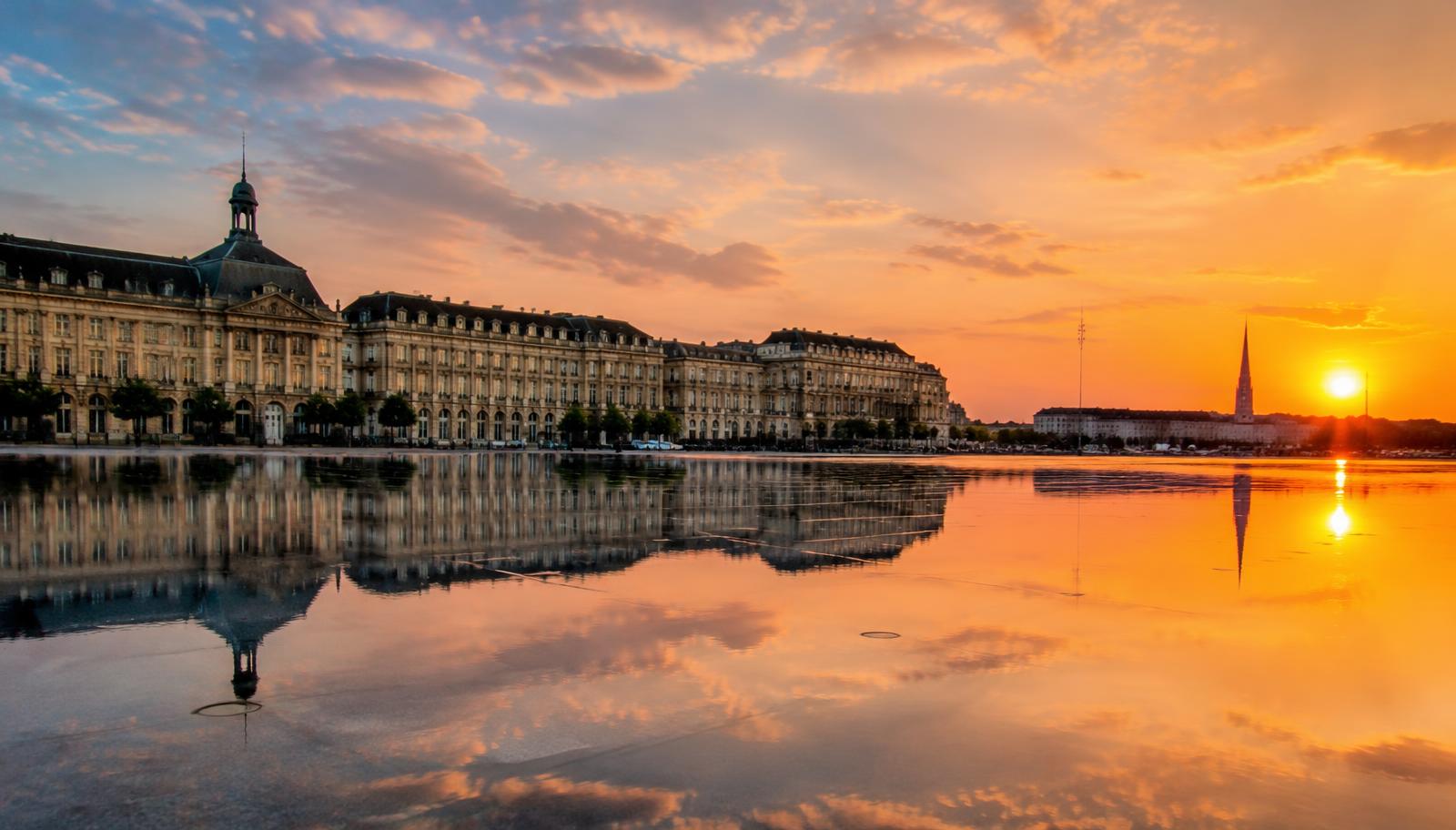
In the afternoon, head down to the river. The long promenade along the quays is the city's great public space, where people walk, cycle, skate and sit by the water. In front of the grand eighteenth-century buildings, a shallow reflecting pool creates a mirror-like surface and occasional mist, a spot that is magical at sunset. Stay as the lights come on, then find dinner in one of the side streets nearby.
Day two: markets and the merchant quarter
Begin your second day at a market. Bordeaux has several, and the riverside market on weekend mornings is especially enjoyable, with oysters, cheese, bread, produce and simple dishes eaten at shared tables by the water. Go hungry, take your time and follow the locals.
Afterwards, walk north into the old merchant quarter. Browse its antique and second-hand shops, visit the covered market and sit in a café on a quiet square. In the afternoon, continue along the river to the newer docklands, where old warehouses and submarine pens have been turned into cultural spaces. Check what is on before you go.
Day three: the right bank and a slow afternoon
Cross one of the bridges to the right bank. Walk or cycle along the riverside paths and parks, enjoying the views back across the water to the long stone façades of the old city. This side feels more open and green, and it is a calm contrast to the historic centre.
Return to the left bank in the afternoon and spend a few hours in the large public garden near the centre, with its lawns, pond and shaded paths. Bring a book or a picnic. In the evening, enjoy a final long dinner with a local wine.
What to eat and drink
Bordeaux is one of the great food and wine cities of France, but eating here is less about formal dining and more about relaxed, generous meals.
Look for local specialities such as duck dishes, beef cooked with wine and shallots, lamprey stew for the adventurous, and simple oysters from the nearby Atlantic basin, often served with a glass of white wine. For something sweet, try the small caramelised cakes with a soft custard centre that the city is known for, sold in bakeries all over town.
Wine is everywhere, of course. Wine bars throughout the city offer glasses from the surrounding regions, and staff are usually happy to explain the differences. You do not need to be an expert; simply ask for something local and enjoy it. The city's large wine museum and cultural centre, on the river north of the centre, is also worth a visit for its architecture alone.
A few tips for eating well:
- Try the set lunch menu. Many restaurants offer one, and it is a relaxed way to sample several dishes.
- Eat at the markets on weekend mornings for simple, fresh food and a local atmosphere.
- Book ahead for dinner in popular places, especially at weekends.
Easy escapes beyond the city
Bordeaux is surrounded by beautiful countryside, and many trips are possible by train, bus or organised tour.
Saint-Émilion, east of the city, is a medieval wine village built on a hillside, with honey-coloured stone, steep lanes and vineyards all around. It is reachable by regional train and makes a lovely day trip. Spend an afternoon wandering, tasting and having a long lunch.
The wine estates of the Médoc, north of the city, line the river with grand châteaux. Many require advance booking for visits, so plan ahead or join a guided tour.
The Atlantic coast is about an hour away. The great sand dune at Arcachon Bay, the largest in Europe, offers wide views over the sea and forest, and the oyster villages along the bay are perfect for a slow seafood lunch.
Use the tours and activities button on this page if you would rather join a guided wine or coastal trip, which can be easier than arranging transport yourself.
When to go
Bordeaux has a mild climate and is pleasant for much of the year. Spring brings soft light and blooming gardens. Summer is warm and lively, with long evenings on the riverfront. Early autumn is perhaps the best time of all, with harvest season in the vineyards and comfortable temperatures. Winter is quieter, with cosy wine bars and fewer visitors. Check event calendars, as major wine events can fill accommodation quickly.
Practical tips for a slow stay
- Stay at least three nights. Bordeaux rewards time, and the day trips are worth adding.
- Walk the quays daily. The riverfront is the heart of city life.
- Book vineyard visits ahead. Many estates do not accept walk-in visitors.
- Take the tram. It is the easiest way to cross the city quickly.
- Go to a weekend market. It is one of the best ways to experience local life.
- Leave unplanned afternoons. Some of the city's best moments come from simply sitting by the river.
Final thoughts
Bordeaux is a city of honey-coloured stone, long river evenings, generous meals and easy escapes into vineyards and the coast. It is elegant without being formal, and it invites you to slow down and enjoy the everyday.
If you are travelling further along the Atlantic, our Porto guide and Lisbon guide continue the journey to Portugal's riverside cities. And when you are back home, our Slow Living Between Trips article will help you keep the gentle rhythm you found here.
Where to stay
Browse places to stay around Bordeaux, France. Prices change, so compare the live rate with the real price and dates shown above. Bookings made through these links may earn us a commission.
Related posts
Travel
Lyon at a Slower Pace: Rivers, Markets and Long Lunches
A slow guide to Lyon: where to stay, a relaxed three-day rhythm, bouchons, markets, river walks and easy escapes to Beaujolais.
· 8 min read
Travel
Salzburg at a Slower Pace: Baroque Squares, Hill Walks and Alpine Lakes
A slow guide to Salzburg: where to stay, a calm three-day rhythm, coffee-house culture, hilltop walks and gentle lake-district escapes.
· 7 min read
Travel
Bruges at a Slower Pace: Quiet Canals and Early Mornings
Stay the night and Bruges becomes yours: where to stay, three slow days of canals, art and windmills, and what to eat.
· 7 min read