Slow Living Between Trips: Bringing the Journey Home
· 6 min read
Disclosure: Some links are affiliate links; we may earn a commission at no extra cost to you.
Travel can change the way we pay attention. A morning drink becomes an occasion rather than something carried between tasks. A street invites a second look. Lunch has a place in the day instead of being fitted around everything else. Returning home does not have to mean giving those pleasures back.
Slow living between trips is not about making every day resemble a holiday. Work, caring responsibilities and practical demands still exist. It is about finding a few manageable ways to feel present within the life you already have. Start with what is available: a familiar walk, a simple meal, a conversation or a corner where you can sit comfortably. No new purchases or perfect routine are required.
Keep one small morning ritual
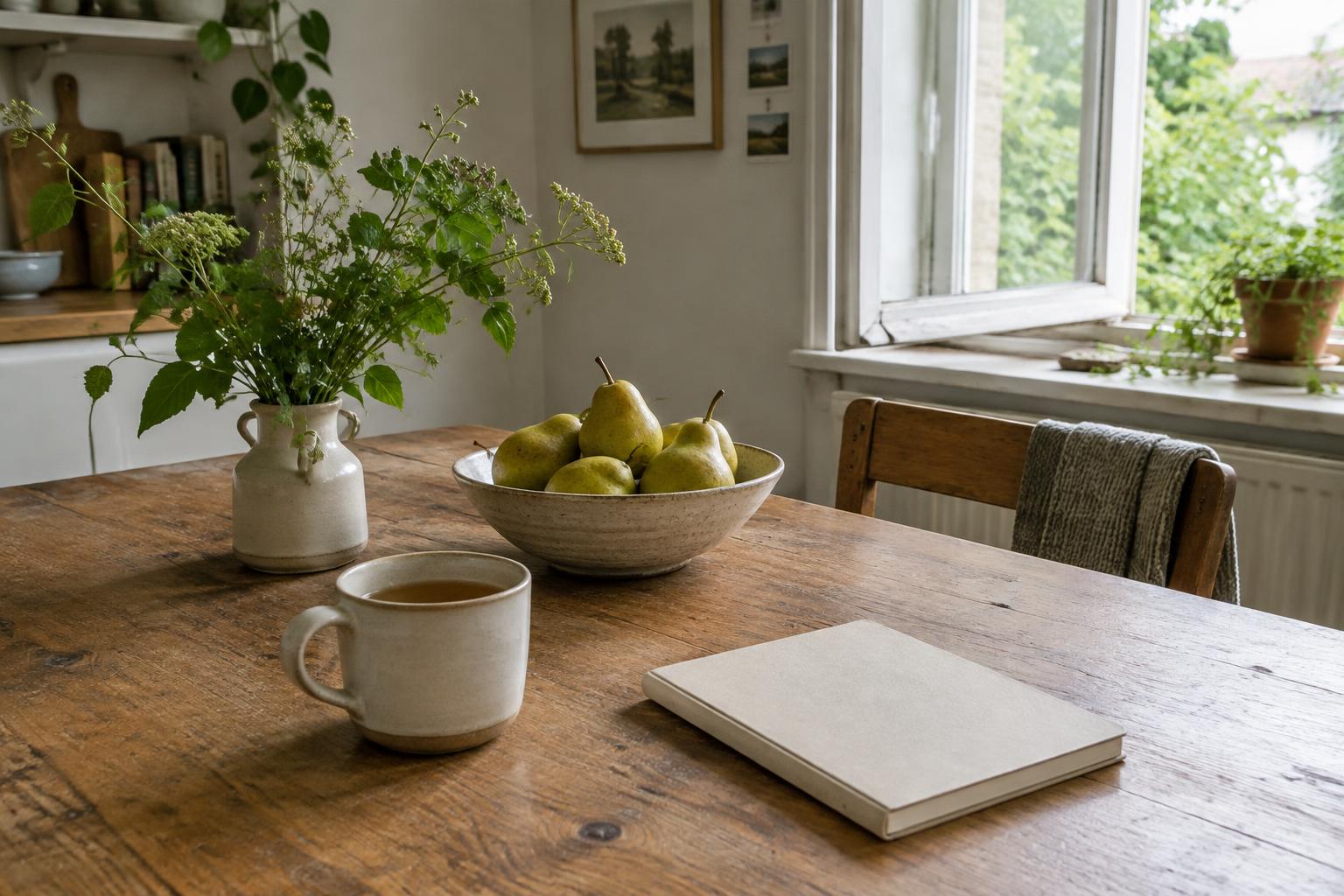
Choose one part of the morning that can happen without rushing, even if the rest of the day cannot. Sit down for your tea, coffee or water. Look through the window rather than opening a feed. Read a page while breakfast is warming. The ritual should fit your actual circumstances, not somebody else's carefully photographed morning.
For a busy household, an evening moment might work better. The point is not the hour; it is the decision to give one ordinary activity your attention. Avoid turning it into another performance to maintain. If a difficult day interrupts it, begin again when you can.
Ask yourself what you enjoy on a trip that could survive at home. Perhaps it is eating without checking messages, stepping outdoors before making plans, or taking a few minutes to decide what matters that day. Keep the smallest workable version.
Explore your neighbourhood like a visitor
Familiarity is useful, but it can make places disappear into the background. Walk a different street when you have the time and energy. Notice a building you normally pass, read a community noticeboard or browse a local library. Curiosity does not require travelling far.
Choose a modest destination: a park bench, a market stall, a bookshop or a stretch of riverside. Leave room to turn back. An outing does not become less worthwhile because it is short or because you choose an accessible route instead of a scenic climb.
If spending is tight, make free places your starting point. If walking is not comfortable, use a familiar accessible journey or explore something nearby from a seated position. Slow living should respond to your needs rather than prescribe a particular body, budget or lifestyle.
Make ordinary meals feel like meals
The pleasure of eating on holiday often comes from attention as much as novelty. At home, begin by giving a meal a clear place to happen. Move unfinished paperwork aside, bring what you need to the table and let the food be the main event for a little while.
You do not need an elaborate recipe. Soup, leftovers, toast or a meal prepared by someone else can all be eaten thoughtfully. If sharing food is possible, ask a question that invites more than a quick update: what caught your attention today, or what would you like to do together soon?
A recipe remembered from travelling can be a gentle bridge between places. Adapt it to available ingredients and your cooking confidence. Describe it honestly as inspired by a dish rather than insisting that a home adaptation represents an entire cuisine. Enjoy learning without turning dinner into a test.
Bring home habits, not just objects
A souvenir can hold a memory, but it is not the only way to keep a journey close. Think about something you did differently while away. Did you read more, take a seated break, browse a food market or spend longer talking over dinner?
Choose one habit and make it practical. A regular library visit may preserve a reading rhythm. A walk with a friend may keep conversation in the week. Cooking one familiar dish may remind you of a place without requiring an expensive collection of ingredients.
Photos can also become more meaningful when you revisit them slowly. Select a few and write down what you actually remember. Keep observation separate from guesses: a street you walked, a meal you ordered, a moment you enjoyed. You do not have to share the result online for it to matter.
Leave a little space in the weekend
A free day can quickly become a list of things to finish. Some tasks are unavoidable, but a little flexibility helps the day feel different from the working week. Choose one necessary task and one enjoyable plan before adding anything else.
Protect an open stretch where possible. It might become a visit, a longer lunch, reading or simply rest. Empty time is not wasted time, and you do not need to produce a memorable experience every weekend.
For people whose schedules change or who work weekends, think in terms of a free window rather than a particular day. A quiet hour on a weekday can be just as valuable. Work with the time you have instead of measuring your life against an ideal calendar.
Make room for people without making an event
Connection can become complicated when every meeting needs a venue, a booking or a carefully prepared home. Try a simpler invitation when it suits both people: a cup of tea, a shared walk, a library visit or a meal made from what is already available.
Be clear about what you can offer. A short visit is still a visit. A home does not have to be spotless, and a meal does not have to impress. Respect other people's energy, access needs and commitments, including their choice to decline.
Travelling can remind us that an ordinary conversation changes the texture of a day. You can make space for that at home by listening without immediately moving toward the next task. Small, repeatable connections are often easier to sustain than ambitious arrangements.
Notice what deserves your attention
There is nothing wrong with enjoying photographs, recommendations or other people's travel stories. But browsing can quietly replace the moment you hoped to enjoy. Decide when a device helps and when it is simply filling a pause.
Put your phone somewhere convenient but not directly beside the plate during one meal. Take a photograph, then spend a little time looking without the camera. Close a tab when it has given you the information you needed. These are experiments, not rules for a morally superior life.
Notice what changes. If a boundary is useful, keep it. If it makes daily logistics harder, adjust it. The aim is more choice about your attention, not guilt about the tools you rely on.
Begin with the version that fits today
Choose one idea rather than rebuilding your week. Tomorrow, sit down for your first drink or take a slightly different route. This week, make one uncomplicated invitation or revisit a recipe. Let the change be small enough to repeat without resentment.
There will be periods when slowing down means doing less, asking for help or resting rather than exploring. That is not a failure of curiosity. It is attention to the life in front of you.
Before planning the next trip, ask: which part of travelling do I miss most, and what is its simplest version here? You may not be able to recreate a city, a landscape or the freedom of being away. You can still make space for the pleasure that made those experiences meaningful. Home deserves some of that attention too.