Venice Beyond the Checklist: A Three-Day Slow Travel Guide
· 7 min read
Disclosure: Some links are affiliate links; we may earn a commission at no extra cost to you.
Choose a neighborhood, not just a landmark
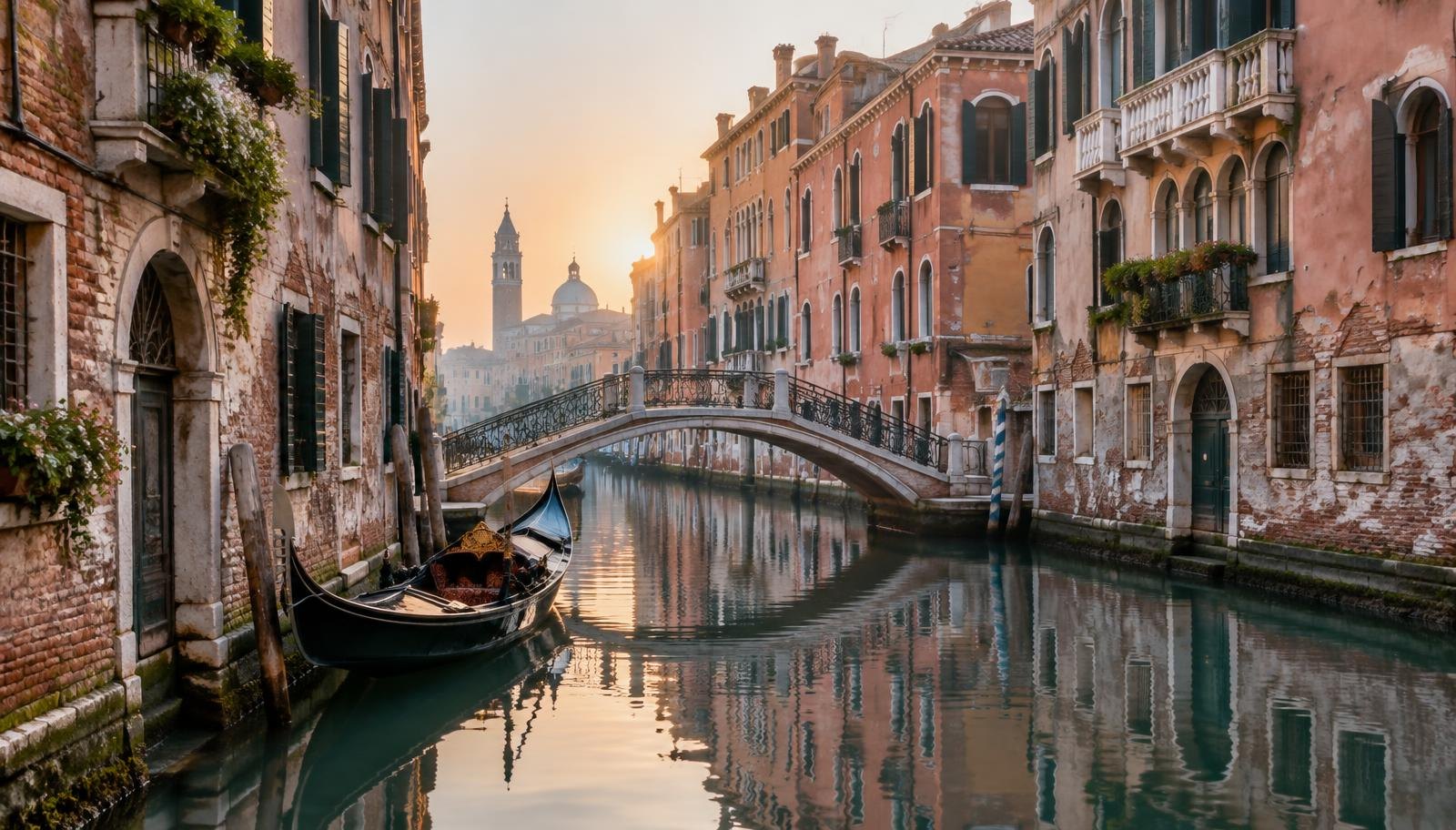
Venice is best approached as a collection of lived-in neighborhoods connected by water and footpaths. The historic city is divided into six sestieri, each with a different relationship to the busiest visitor routes. Staying within the island city makes it easier to enjoy quieter mornings and return to your room between outings, but the exact location matters more than a romantic description.
San Marco offers proximity to celebrated sights, with the corresponding bustle. San Polo combines central access with lanes and squares around the Rialto area. Cannaregio includes residential streets and useful connections toward the railway station, although its popular canalside areas can be lively at night. Dorsoduro suits visitors interested in art and longer waterfront walks. Castello stretches from busy central streets into quieter eastern areas. Santa Croce can be practical for arrivals near the road and bus terminals.
Before booking, map the route from your arrival stop and count the bridges. Ask about stairs, lifts, flood precautions, and nighttime noise. Mainland accommodation can be a sensible budget choice, but include the daily journey in your planning. For any base, proximity to a useful vaporetto stop may matter more than straight-line distance.
Learn the balance between walking and water transport
There are no ordinary road vehicles within Venice's historic pedestrian core. Walking and water transport form the everyday travel network. A short map distance can involve several bridges, narrow passages, and occasional wrong turns. Navigation apps help, but their directions are not infallible. Follow signs for major destinations when useful, then step aside before checking your phone.
Vaporetti are public water buses, not private sightseeing boats. Routes connect parts of the city and lagoon, but stops can have multiple boarding points serving different directions. Check the destination display and official service information before boarding. Compare ticket products with your actual plans, and follow current validation requirements. Airport water services and private water taxis are separate arrangements; do not assume a city transport ticket covers them.
Travel light if possible. Luggage is difficult to carry over stepped bridges and can obstruct crowded boats. Keep boarding areas clear, let passengers disembark first, and make room for people who need seats.
A gondola ride is an optional experience rather than essential transport. Confirm the official tariff, duration, route expectations, and any supplements before agreeing. Shared traghetto crossings operate at selected Grand Canal points, but availability should be checked locally.
See fewer sights with greater attention
Piazza San Marco deserves time even without entering a building. Observe the relationship between the basilica, the Doge's Palace, and the open space facing the lagoon. The square is both a celebrated civic setting and a place affected by crowding and occasional high water. An early walk may feel different from a midday visit, but quiet should never be guaranteed.
Choose whether St Mark's Basilica or the Doge's Palace will be your main interior visit. Their histories overlap, yet each asks for sustained attention. Check official booking procedures, bag restrictions, dress requirements, and any separately ticketed areas. Religious services can affect basilica access. Avoid arranging consecutive timed entries with no room for queues or rest.
For another day, consider the Gallerie dell'Accademia for Venetian painting or the Peggy Guggenheim Collection for modern art. The Scuola Grande di San Rocco offers a different encounter with the work of Tintoretto. Choose by genuine interest, not reputation alone.
Smaller churches, neighborhood squares known as campi, and waterfront walks provide valuable context between major visits. Venice's history becomes clearer when grand institutions are balanced with the spaces where people shop, commute, meet friends, and take children to school.
Eat with curiosity and clear expectations
Venetian cooking reflects the lagoon, maritime trade, and the wider Veneto. Seafood is prominent, but its presence on a menu does not establish that it was caught locally. Ask when provenance matters to you, and treat seasonal recommendations as an invitation to learn rather than a guarantee of sustainability.
Traditional dishes include sarde in saor, sardines prepared with onions and a sweet-sour balance, and baccalà mantecato, a creamy preparation commonly made with stockfish. Risotto and polenta appear in many forms. Recipes vary, and ingredients such as raisins, nuts, anchovies, or dairy may not be obvious from a short description.
Cicchetti are small savory portions served in bacari and other informal settings. They can make a light meal or a pause between walks, but ordering customs and seating arrangements differ. Look at the display, ask what is available, and clarify whether service is at the counter or table. Alcohol is optional.
Read menus before sitting down, including cover charges and any items priced by weight. Confirm the total basis for seafood orders rather than assuming a listed figure is the final portion price. For dietary restrictions, communicate specific needs directly. Choose designated places for breaks rather than eating on bridges or monument steps.
A detailed three-day slow itinerary
Day one: arrival, orientation, and a neighborhood walk. Keep your first morning or afternoon local. After leaving your bags, learn the route between your accommodation and its most useful water-bus stop. Find a nearby place for a seated meal, then explore a modest circuit rather than immediately crossing the whole city.
If based in Cannaregio, wander through its campi and canalside streets, including the area of the historic Jewish Ghetto with appropriate respect for its living community and memorial sites. From another base, choose an equally local route. Later, take a vaporetto journey along part of the Grand Canal if it fits your ticket and energy. Treat it as public transport: enjoy the palaces without blocking doors or claiming space needed by commuters. Eat close to your accommodation and leave the evening open.
Day two: San Marco with breathing space. Walk toward Piazza San Marco with time to spare, allowing the journey to be part of the morning. Make either the basilica or the Doge's Palace your main booked visit. Afterward, move away from the most congested approaches for lunch and a substantial rest.
Spend the afternoon walking gradually into Castello. The waterfront opens toward the lagoon, while inland streets offer a different scale of city life. Continue toward the Giardini area if your energy allows, noting that exhibitions and garden access can involve separate arrangements. Otherwise, turn back sooner and pause in a neighborhood square. Return by water bus if that reduces fatigue. Keep dinner simple rather than adding another cross-city journey.
Day three: Dorsoduro and one chosen collection. Begin with the Accademia area and a single art visit suited to your interests. Leave enough time afterward to sit and discuss or reflect on what you have seen. Continue toward the Zattere waterfront for lunch nearby and an unhurried walk with views across the Giudecca Canal.
In the afternoon, explore smaller streets and campi, allowing for dead ends without treating them as mistakes. If an outer-island visit is your strongest interest, substitute a properly planned Murano or Burano outing for this whole day's program rather than attaching it to the end. Check return services and allow for queues and weather. Finish near your base, with time to organize departure tickets and confirm the correct boarding point for your onward journey.
Prepare for water, weather, and uneven access
Venice's beauty does not remove practical challenges. Bridges commonly have steps, paving can become slippery, and waterfront edges may lack barriers. Keep children close near canals, wear secure footwear, and avoid stepping backward for photographs without checking your surroundings. Swimming in city canals is prohibited and unsafe.
High water, known as acqua alta, can affect low-lying areas. Flood conditions depend on tides and weather, and protective infrastructure does not eliminate the need to check forecasts. Follow local alerts, respect temporary walkways, and ask your accommodation about the immediate route outside its entrance. Do not build an itinerary around a generic seasonal assumption.
For wheelchair users and travelers who cannot manage steps, accessibility requires route-specific research. Some vaporetto connections help bypass bridge barriers, but boarding conditions and access to individual buildings vary. Confirm current information with transport operators and accommodation providers.
Keep valuables secure in crowded boats and arrival areas. Carry water, take shaded breaks in hot weather, and seek shelter when conditions worsen. The emergency number is 112. Keep essential medication with you rather than in checked luggage, especially when a delayed boat connection could disrupt arrival plans.
Be a considerate guest in a living city
Venice has visitor rules intended to protect public space and daily life. Check current official guidance before traveling, including whether access-fee registration or payment applies to your dates and circumstances. Overnight accommodation does not automatically mean there is no administrative step; exemptions and procedures should be verified. Accommodation taxes are a separate matter.
Keep right where practical in busy passageways, do not block bridges, and avoid stopping in doorways. Ask before photographing residents or private interiors. Use proper bins and follow accommodation instructions for waste sorting. Choose legitimate crafts thoughtfully: a souvenir's appearance alone does not establish Venetian manufacture. Respectful curiosity is more useful than expecting every street to function as a visitor attraction.
Let Venice set a gentler pace
The most satisfying Venice itinerary has room for interruption: a boat arriving later than expected, a square worth lingering in, or a bridge that reveals a different view. One substantial visit and one neighborhood walk can be enough for a day.
Resist measuring the trip by the number of islands or monuments covered. Leave with a clearer sense of how the city fits together, how water shapes its routines, and how considerate travel makes space for both visitors and residents.
Where to stay
Browse places to stay around Venice, Italy. Prices change, so compare the live rate with the real price and dates shown above. Bookings made through these links may earn us a commission.
Related posts
Travel
Lyon at a Slower Pace: Rivers, Markets and Long Lunches
A slow guide to Lyon: where to stay, a relaxed three-day rhythm, bouchons, markets, river walks and easy escapes to Beaujolais.
· 8 min read

Travel
Salzburg at a Slower Pace: Baroque Squares, Hill Walks and Alpine Lakes
A slow guide to Salzburg: where to stay, a calm three-day rhythm, coffee-house culture, hilltop walks and gentle lake-district escapes.
· 7 min read
Travel
Bordeaux at a Slower Pace: Stone Streets, River Evenings and Wine Country
A slow guide to Bordeaux: where to stay, a relaxed three-day rhythm, markets, wine bars and easy trips to Saint-Émilion and the Atlantic coast.
· 7 min read