Edinburgh at an Unhurried Pace: A Slow Travel Guide
· 7 min read
Disclosure: Some links are affiliate links; we may earn a commission at no extra cost to you.
Choose a base beyond the postcard view
Edinburgh’s center is compact on a map but shaped by steep streets, stairways and changes in level. A good base should suit your mobility and preferred evening atmosphere, not simply sit close to the castle. Check the actual walking route from transport stops before booking, especially if you will arrive with luggage.
The Old Town offers immediate access to historic lanes and major sights. It can also be busy, and accommodation in older buildings may involve stairs or street noise. Ask about lift access and the location of your room rather than assuming a central address guarantees convenience.
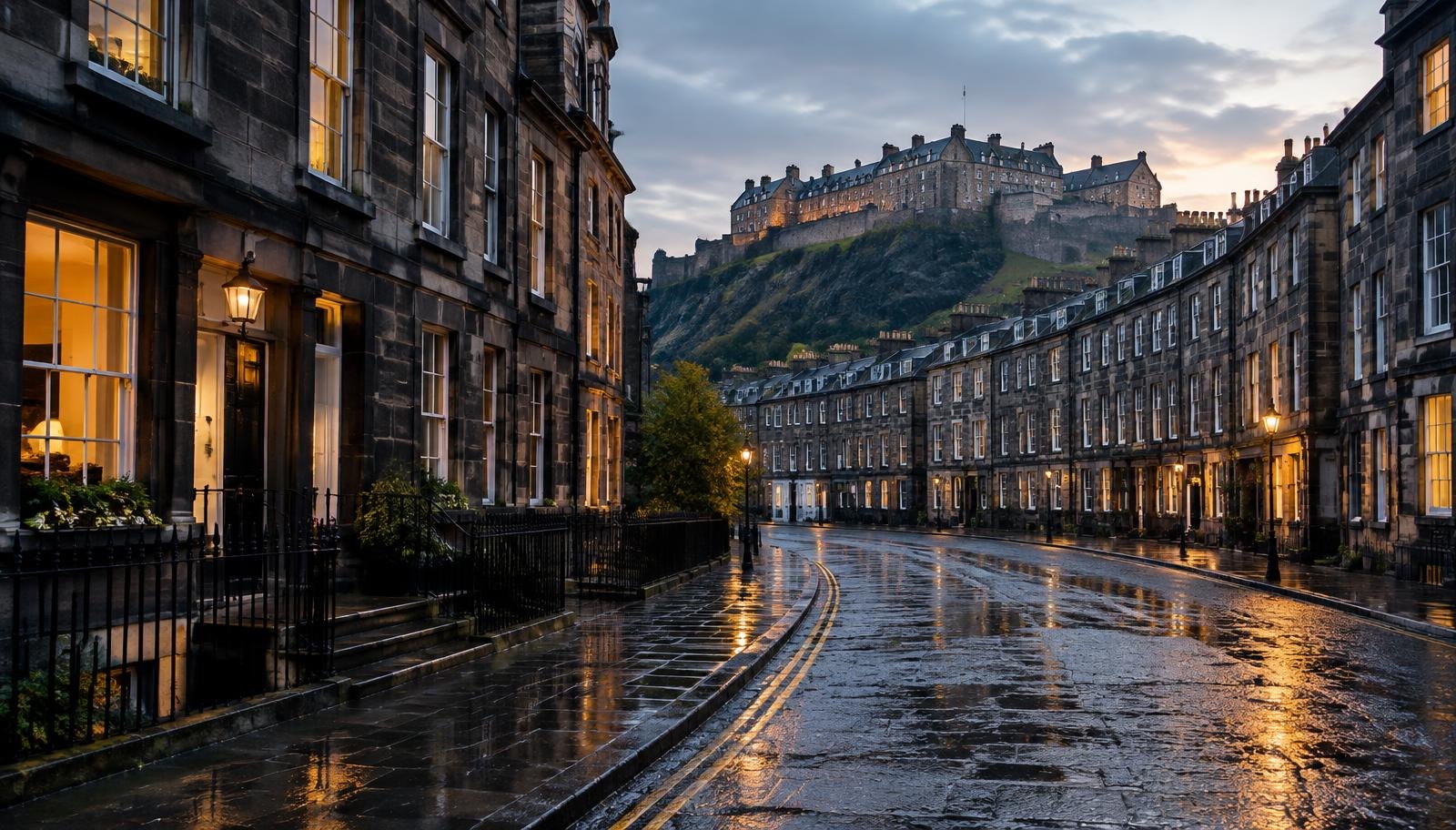
The New Town has Georgian streets, shops and cafés, with some gentler walking routes, though gradients still matter. Stockbridge suits travelers who enjoy neighborhood browsing and access to riverside walks. The West End can be practical for transport, while Leith offers a distinct waterfront setting farther from the main historic sights. Wherever you stay, prioritize a comfortable room, a nearby bus or tram connection, and somewhere easy to eat when the weather discourages another long walk.
Walk thoughtfully and use buses without hesitation
Walking reveals Edinburgh’s layers: a narrow close opens into a courtyard, a bridge crosses what looks like another ordinary street, and a sudden gap reveals distant hills. Yet the shortest route is not always the easiest. Mapping apps may direct you up stairways or over steep cobbled sections, particularly around the Old Town.
Allow time for crossings, gradients and pauses. Supportive shoes with good grip help on rain-polished paving. If a route looks tiring, using a bus is a sensible part of a slow visit, not a failure to explore properly.
Buses connect the center with residential districts and attractions farther out. Trams serve the airport, central areas and Leith, continuing to Newhaven. Check current ticket zones and payment instructions, especially for airport travel, rather than assuming every journey uses the same fare arrangement. Railway arrivals also deserve planning: Waverley sits below surrounding streets, while Haymarket may suit some western bases. Before leaving either station, identify the exit and onward connection that best match your accommodation and mobility needs.
Balance landmark visits with quieter spaces
Edinburgh Castle occupies a commanding volcanic rock and contains several distinct areas to explore. It deserves an unrushed visit, with attention to uneven ground, slopes and potential queues. Book ahead when appropriate, and check which parts are accessible if steps or prolonged standing are difficult.
The Royal Mile connects the castle area with the Palace of Holyroodhouse. Rather than walking it as one continuous attraction, break it into smaller sections. Notice the closes branching from the main street, entering only where public access is permitted. St Giles’ Cathedral remains a place of worship as well as a visitor destination; services and quiet reflection take precedence over sightseeing.
For an indoor counterpoint, the National Museum of Scotland offers broad collections that can support a focused visit rather than an attempt to see everything. The Scottish National Gallery provides another option for an art-centered pause. Outdoors, Princes Street Gardens offers views beneath the castle, while Calton Hill provides a wider city perspective. Its approaches involve climbing, so select it for a suitable weather window rather than treating it as compulsory.
Enjoy Scottish food without turning meals into a checklist
Edinburgh’s food culture extends well beyond a handful of traditional dishes. Scottish seafood, oats, root vegetables, baking and dairy products sit alongside the cooking of the city’s many communities. Look for menus that suit your appetite and dietary needs rather than choosing every meal for its symbolic value.
Haggis traditionally includes offal and oatmeal; vegetarian versions also exist, but ingredients differ. Cullen skink is a smoked fish soup, usually made with potatoes and onions. These can be useful starting points for exploring Scottish cooking, not obligations. Ask about allergens, especially where oats, fish, dairy or shared preparation areas are involved.
A bakery breakfast, a leisurely lunch and an early supper can create a comfortable day without repeated reservations. Tea and a slice of cake make a welcome shelter from passing rain. If you drink alcohol, whisky can be approached through a small, considered tasting rather than quantity. Check whether a service charge is included before adding a tip, and treat tipping as discretionary rather than an automatic fixed rule.
Day one: explore the Old Town in manageable pieces
Begin around the upper Royal Mile, taking time to understand how the castle and the street relate to the surrounding city. If the castle is your priority, make it the morning’s main activity and resist attaching several other ticketed sights immediately afterward. Allow time for security procedures, walking between areas and simply absorbing the setting.
After lunch, continue along a shorter section of the Royal Mile. Pause around St Giles’ Cathedral, then explore an accessible close or public courtyard. Some passages lead to private spaces, so signs and residents’ privacy matter more than the promise of a photograph.
For the afternoon, choose either a focused visit to the National Museum of Scotland or a gentle walk toward the lower Old Town. You do not need both. A café break can bridge the change from sightseeing to evening, particularly when the streets are wet or crowded. Keep dinner near your base and avoid an ambitious sunset plan on arrival day. Edinburgh’s gradients are easier to enjoy when you finish with some energy left.
Day two: Georgian streets, gardens and Stockbridge
Dedicate the second morning to the New Town. Walk along a few Georgian streets, observing their proportions, stonework and relationship to the wider city rather than trying to cover the entire district. Remember that much of this architecture is lived in: doorsteps, basement entrances and private gardens are not public resting places.
Spend time in Princes Street Gardens if conditions suit, or choose the Scottish National Gallery as the day’s principal indoor visit. Follow your interests within the collection instead of moving through rooms simply to complete them. Take lunch before extending the route northward.
In the afternoon, explore Stockbridge and consider a section of the Water of Leith walkway. River paths may be muddy, slippery or temporarily diverted, so check local notices and turn back when necessary. Dean Village is visually appealing but also residential; keep voices low and avoid blocking narrow routes. Finish with a bus journey if the return climb feels uninviting. The aim is a day of connected neighborhoods, not a distance target achieved at the expense of comfort.
Day three: choose Holyrood or Leith, then slow down
For the final morning, choose a direction rather than trying to combine every remaining landmark. At the foot of the Royal Mile, the Palace of Holyroodhouse offers a royal and historical focus. It is a working royal residence, so access can change; confirm visitor arrangements before making it the anchor of your day.
Nearby Holyrood Park provides a different encounter with the city’s landscape. Arthur’s Seat is a hill walk, not a casual extension of a shopping stroll. Its routes can be steep, rough and exposed. Attempt it only with suitable footwear, sufficient time and appropriate weather, and choose a lower-level alternative if conditions or mobility make that wiser.
Alternatively, travel to Leith for waterfront walking and a slower neighborhood lunch. Its maritime character offers a useful contrast with central Edinburgh. Whichever option you choose, keep the afternoon lightly planned. Return for a favorite café, browse a few shops, or rest before departure. Avoid placing a hill walk or distant outing immediately before a train or flight; the final buffer is part of the itinerary.
Take practical care in changeable conditions
Edinburgh weather can shift quickly, and wind often makes exposed viewpoints feel colder than sheltered streets. Carry a waterproof outer layer and adaptable clothing, even when the day begins brightly. In winter, limited daylight should influence outdoor plans. On hills, poor visibility and strong winds are reasons to reconsider, not challenges to overcome.
Tap water is safe to drink. A reusable bottle and a small bag for carrying litter help reduce waste during walks. Toilets are not available at every viewpoint or along every riverside stretch, so plan around facilities at museums, transport hubs and places where you stop to eat.
Check accessibility for individual buildings and routes: historic character often comes with steps, narrow doorways or uneven surfaces. Keep valuables secure in crowded areas, and use pedestrian crossings rather than stepping into traffic for a photograph. For emergencies, call 999 or 112. In graveyards and places of worship, behave quietly, stay off fragile monuments, and remember that these remain meaningful spaces rather than merely atmospheric backdrops.
Let the city keep some of its secrets
Edinburgh does not need to be exhausted in three days. Its appeal lies partly in the contrast between dramatic landmarks and ordinary neighborhood life: a sheltered garden after a busy street, a warm café after rain, or a view that appears between buildings.
Give each day one clear focus and permission to change. Let weather guide outdoor plans, use public transport before fatigue takes over, and leave room to revisit somewhere you enjoyed. A thoughtful introduction can be more satisfying than comprehensive coverage, especially in a city whose details reward looking slowly.
Where to stay
Browse places to stay around Edinburgh, Scotland. Prices change, so compare the live rate with the real price and dates shown above. Bookings made through these links may earn us a commission.
Related posts

Travel
Lyon at a Slower Pace: Rivers, Markets and Long Lunches
A slow guide to Lyon: where to stay, a relaxed three-day rhythm, bouchons, markets, river walks and easy escapes to Beaujolais.
· 8 min read

Travel
Salzburg at a Slower Pace: Baroque Squares, Hill Walks and Alpine Lakes
A slow guide to Salzburg: where to stay, a calm three-day rhythm, coffee-house culture, hilltop walks and gentle lake-district escapes.
· 7 min read
Travel
Bordeaux at a Slower Pace: Stone Streets, River Evenings and Wine Country
A slow guide to Bordeaux: where to stay, a relaxed three-day rhythm, markets, wine bars and easy trips to Saint-Émilion and the Atlantic coast.
· 7 min read