Athens at an Unhurried Pace: A Slow Travel Guide
· 7 min read
Disclosure: Some links are affiliate links; we may earn a commission at no extra cost to you.
Choosing a base with room to settle
Athens becomes more approachable when your accommodation supports ordinary pleasures: a nearby bakery, an easy walk home, and somewhere to pause between outings. Rather than choosing only by distance from the Acropolis, consider street noise, slopes, and access to the metro. A central address can still sit above a busy bar or on a steep lane.
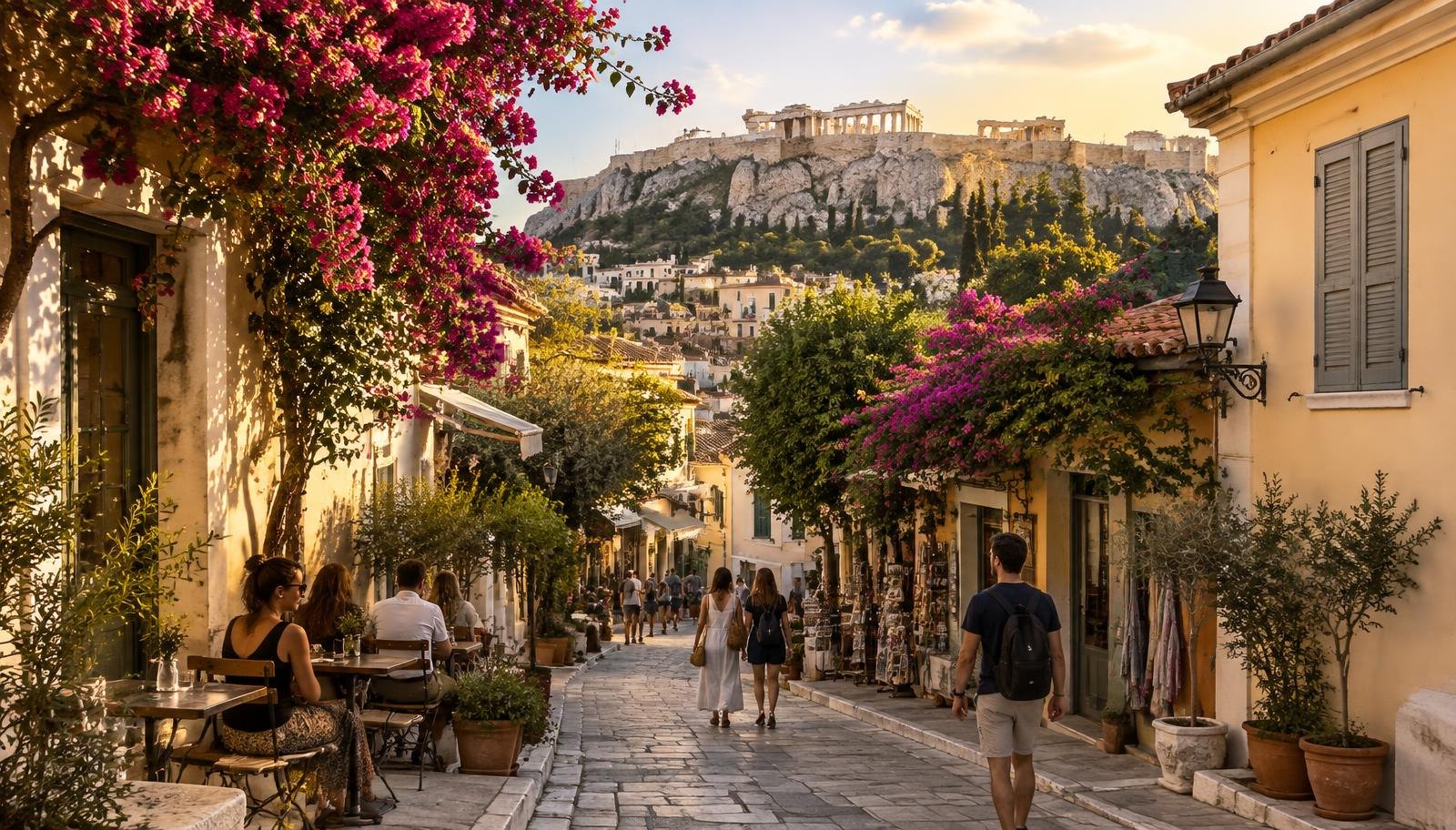
Plaka offers winding streets and close access to major monuments, although its busiest stretches attract substantial visitor traffic. Koukaki has a more residential rhythm alongside cafés and visitor accommodation, with convenient access to the Acropolis Museum. Thiseio suits travelers who value pedestrian promenades and evening walks, while parts of Pangrati offer neighborhood squares and everyday dining farther from the main archaeological cluster.
Syntagma is practical for transport connections but feels busier. Before booking, check recent information about sound insulation, lifts, and air conditioning. In older buildings, stairs may be unavoidable. Staying in one base throughout a short visit saves packing time and makes familiar streets part of the experience.
Walking and public transport
Central Athens rewards walking, but distances on a map do not explain everything. Hills, uneven paving, traffic, and summer heat can turn a modest route into a tiring outing. Build each day around one area, then use public transport when crossing the city rather than treating every journey as a sightseeing walk.
The pedestrian route around the southern side of the Acropolis is especially useful for linking major sights. Elsewhere, pavements can narrow abruptly, and parked vehicles sometimes reduce available space. Wear shoes with reliable grip: polished stone around ancient sites can be slippery, particularly after rain.
The metro provides a straightforward backbone, supported by buses, trolleybuses, and the tram. Check current official ticket rules, including airport services, because some journeys require different fares. Validate or activate your ticket as instructed and keep it until the journey is complete. For step-free travel, verify lift availability and the approach to each station. A station lift does not guarantee an accessible route through the surrounding neighborhood.
Giving the major sights enough time
The Acropolis deserves a visit shaped around attention rather than a checklist. Its monuments occupy a rocky hill with exposed paths and limited shade. Choose a suitable entry period, check current reservation requirements, and leave time to stop without blocking narrow passages. The Parthenon is the best-known building, but the wider arrangement of sanctuaries helps explain the site's religious and civic importance.
Pairing the hill with the Acropolis Museum can deepen the experience, though they need not happen back to back. The museum provides context for sculpture and architecture that can be difficult to absorb outdoors. Treat the two as separate visits with a proper meal or rest between them.
The Ancient Agora offers another perspective: the spaces of public life below the monumental summit. The National Archaeological Museum broadens the story beyond Athens itself and merits a dedicated outing. You do not need every major collection in three days. Choose according to curiosity, and leave space for a neighborhood church, a shaded square, or simply watching the city move around its ancient remains.
Food culture and the pleasure of a longer meal
Eating slowly in Athens means making room for everyday routines as well as generous shared tables. Breakfast might be bread, a savory pie, or yogurt, followed by coffee taken without an immediate departure. Bakeries are useful for simple beginnings, but avoid turning every meal into something eaten while walking.
At lunch or dinner, several dishes for the table can introduce variety without requiring an elaborate plan. Look for cooked vegetables, pulses, salads, grilled foods, and seasonal preparations. Greek cooking includes many plant-based dishes, although a vegetable dish may still contain cheese or other animal ingredients. Ask clearly when dietary requirements matter.
Menus and customs vary, so confirm portion sizes before ordering a large spread. Bread or other table items may carry a charge; ask if uncertain. For an easier conversation and a calmer meal, choose a table away from the busiest pedestrian flow. Greek coffee leaves grounds in the cup, so let it settle rather than drinking to the bottom.
Day one: the Acropolis and its surrounding streets
Begin with the Acropolis, keeping the rest of the morning free of competing commitments. Carry water, protect yourself from the sun, and use only permitted visitor routes. Stop at viewpoints when space allows, then spend time looking at the buildings rather than trying to photograph every angle. If mobility or heat is a concern, investigate current access arrangements before committing to the ascent.
After descending, take a seated lunch near your onward route. This is a useful moment to judge your energy honestly. The Acropolis Museum makes sense in the afternoon if you still feel attentive; otherwise, move it to another day and return to your accommodation for a rest.
Later, wander through Plaka without trying to cover every lane. Around Anafiotika, remember that picturesque passages are also residential spaces. Keep voices low, avoid photographing people through windows, and do not obstruct doorways. Finish with an easy dinner and a short walk along the pedestrian promenade, allowing the changing light on the hill to provide the evening's main event. Resist adding a distant nightlife district simply because it is famous.
Day two: the Agora, market streets, and a familiar evening
Give the Ancient Agora the morning, including the museum in the Stoa of Attalos if it suits your interests. The site makes more sense when approached as a setting for civic, commercial, and social activity rather than a collection of isolated ruins. Pause where you can understand the relationship between open ground, surviving structures, and the Acropolis above.
Continue toward Monastiraki for lunch, taking the busy streets at your own pace. If browsing market stalls or shops, distinguish between something genuinely useful and a purchase made only because a place is described as a shopping destination. Keep valuables secure in crowded passages.
In the afternoon, explore the streets around the central food market if trading is taking place. This is a working environment, so stand clear of deliveries and ask before photographing vendors or close views of their displays. Expect animal products and busy handling areas. Later, return to a square or café near your base. Repeating a place gives the trip continuity and removes the pressure to find a new setting for every meal. Leave the evening largely unplanned.
Day three: a museum and neighborhood life
Set aside the morning for the National Archaeological Museum, checking current access and exhibition information before traveling. Rather than moving through every room at the same speed, choose a few areas that interest you: prehistoric material, sculpture, or objects that reveal domestic life. Read enough to establish context, then allow individual works to hold your attention.
Have lunch nearby or take public transport toward Pangrati for a different neighborhood atmosphere. Avoid adding a long cross-city walk merely to connect the two. Around Pangrati, a modest circuit of residential streets and a square can be more rewarding than another sequence of monuments. The Panathenaic Stadium offers a useful architectural point of reference nearby; decide separately whether an interior visit fits your interests and energy.
For a quieter finish, consider the National Garden, subject to current access conditions, or revisit the Acropolis-side promenade. Leave time to pack and understand your departure route. A final dinner close to your accommodation makes the last evening feel like part of the stay rather than a logistical sprint. Keep an alternative indoor plan if heat or rain changes the day.
Practical care for yourself and the city
Athens requires particular care in hot weather. Carry drinking water, use sun protection, and schedule exposed archaeological sites away from the hottest part of the day when possible. Follow local guidance during extreme heat or wildfire conditions; closures and transport changes can occur. Do not assume a shaded café stop is an adequate substitute for a longer indoor rest.
Traffic deserves attention even on familiar streets. Use crossings, watch for motorcycles, and avoid stepping backward for photographs. Keep bags closed on public transport and in busy visitor areas, with essential documents stored securely.
For religious buildings, dress respectfully and follow any photography restrictions. At archaeological sites, never climb or sit on remains unless explicitly permitted. Accessibility varies significantly, so travelers with mobility needs should confirm specific routes rather than relying on a general accessibility label. Carry any necessary medication in its original packaging and know that 112 is the emergency number. Small acts of care—refilling a bottle, reducing disposable packaging, and respecting residents' space—fit naturally into a slower visit.
Leaving with a sense of Athens
A satisfying Athens trip does not depend on exhausting its monuments. Three thoughtful days can connect the Acropolis with civic history, museum collections with living neighborhoods, and celebrated Greek dishes with the simple habit of sitting down to eat.
Keep one principal commitment each morning and let the rest of the day respond to weather, energy, and interest. Return to a street you liked. Take transport without feeling that walking is more authentic. Leave a museum before attention becomes fatigue. Athens is both an ancient landscape and a working modern capital; giving each side room is the foundation of a warmer, more grounded stay.
Where to stay
Browse places to stay around Athens, Greece. Prices change, so compare the live rate with the real price and dates shown above. Bookings made through these links may earn us a commission.
Related posts
Travel
Lyon at a Slower Pace: Rivers, Markets and Long Lunches
A slow guide to Lyon: where to stay, a relaxed three-day rhythm, bouchons, markets, river walks and easy escapes to Beaujolais.
· 8 min read

Travel
Salzburg at a Slower Pace: Baroque Squares, Hill Walks and Alpine Lakes
A slow guide to Salzburg: where to stay, a calm three-day rhythm, coffee-house culture, hilltop walks and gentle lake-district escapes.
· 7 min read

Travel
Bordeaux at a Slower Pace: Stone Streets, River Evenings and Wine Country
A slow guide to Bordeaux: where to stay, a relaxed three-day rhythm, markets, wine bars and easy trips to Saint-Émilion and the Atlantic coast.
· 7 min read